Recent News
The AI Boom Needs Steel. But Can the Grid Keep Up?
The growth of artificial intelligence is creating new demand for metals—and new competition for the power required to produce them.
Artificial intelligence may live in the cloud, but the infrastructure supporting it is decidedly physical.
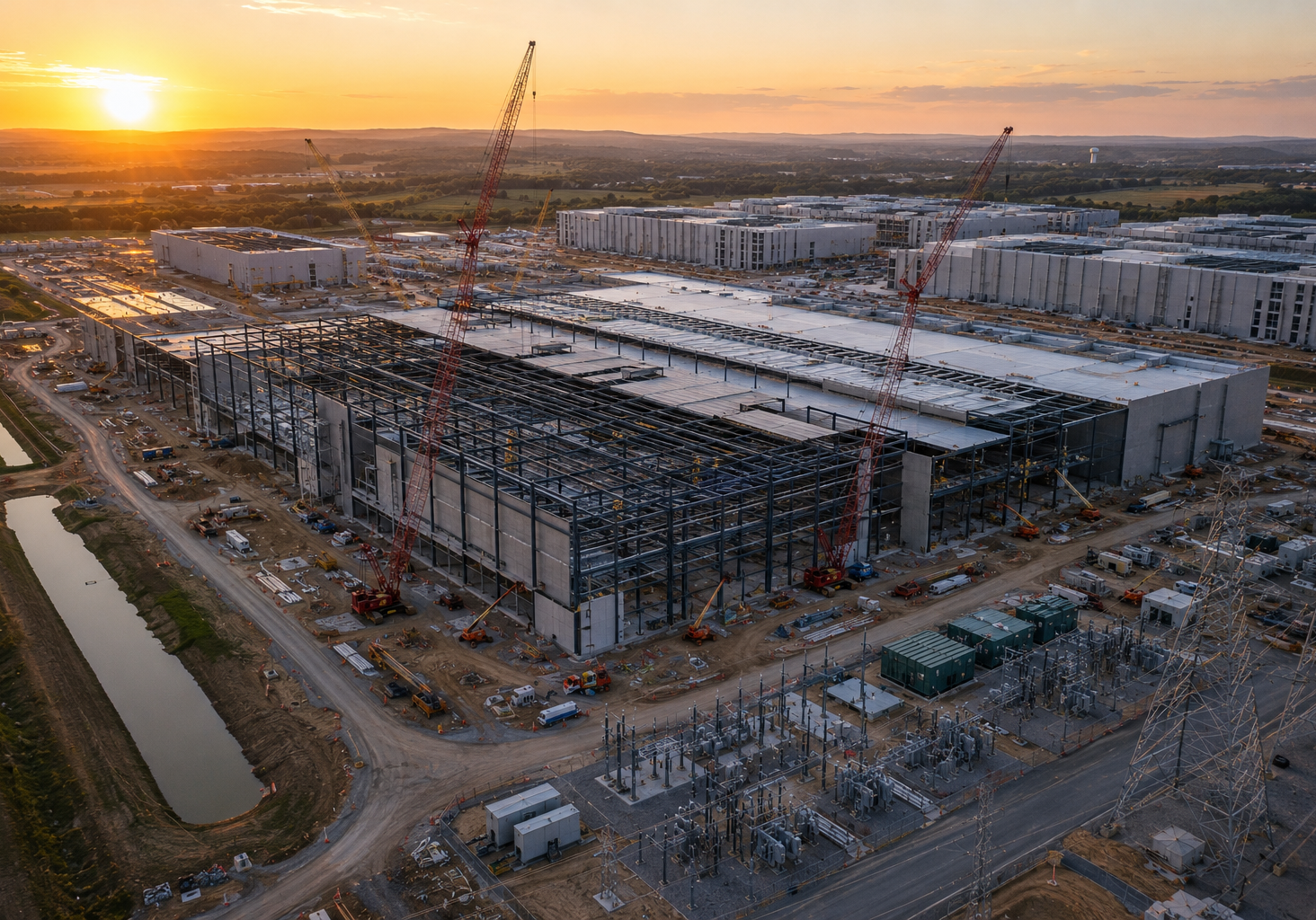
Behind every generative-AI model, cloud platform, and digital service is a growing network of data centers filled with servers, cooling systems, electrical equipment, backup power, and increasingly sophisticated infrastructure.
Building that infrastructure requires enormous amounts of physical material.
Steel. Aluminum. Copper. Electrical steel. Specialty alloys.
As technology companies race to expand computing capacity, the AI boom is creating an important new source of demand for manufacturers throughout the metals industry.
But there is an interesting contradiction developing.
The data centers creating new demand for American metals also require enormous amounts of electricity.
So do the manufacturers producing those metals.
One of the industries creating new opportunities for American steel may also be competing with steelmakers for one of their most important production inputs: power.
AI Has a Very Physical Footprint
The popular image of artificial intelligence is almost weightless: algorithms, data, and computing power operating somewhere in “the cloud.”
The reality looks very different.
The cloud sits inside enormous physical facilities that require steel-intensive buildings, foundations, roofing systems, equipment supports, cooling infrastructure, electrical systems, substations, transformers, transmission equipment, and backup generation.
That creates opportunities far beyond the technology industry itself.
Steel producers and fabricators can benefit from construction and infrastructure demand. Copper and aluminum are needed throughout electrical and cooling systems. Electrical steel plays an important role in transformers and other equipment required to expand the grid.
The AI buildout is therefore becoming more than a technology story.
It is becoming a manufacturing, materials, infrastructure, and energy story.
And that is where things get particularly interesting for the metals industry.
The Electricity Collision
Data centers don’t simply require large amounts of material during construction. Once operational, they require substantial amounts of electricity around the clock.
Modern American steelmaking is also increasingly dependent on electricity.
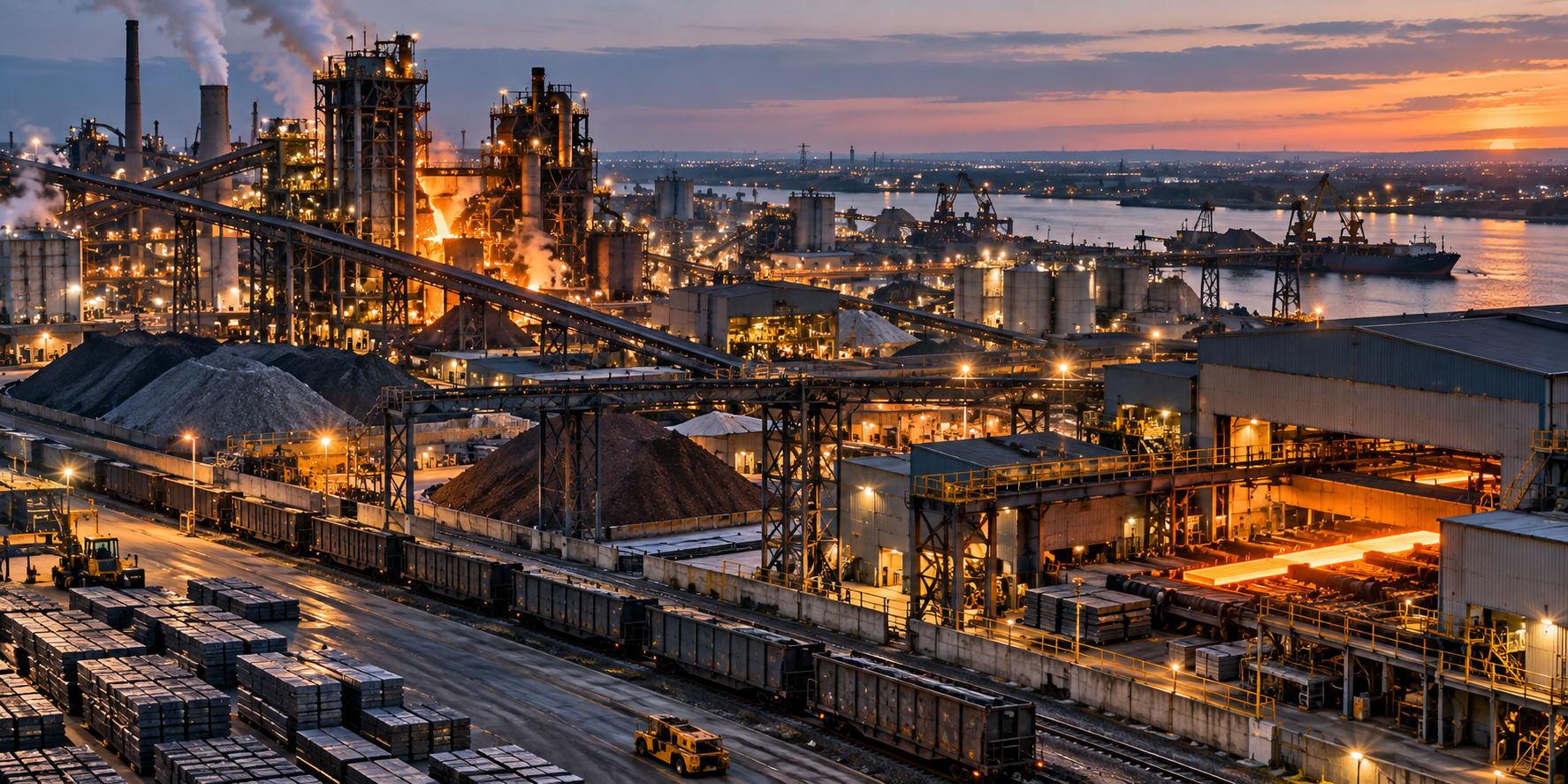
Electric arc furnaces use electrical energy to melt scrap and other metallic inputs and now account for the majority of steel production in the United States.
For these producers, reliable and competitively priced electricity isn’t simply another utility expense. It is fundamental to production.
Now, rapidly expanding data-center development is adding substantial new demand to many of the same regional electrical systems serving manufacturers.
That creates an unusual relationship.
Steelmakers benefit from supplying the infrastructure needed to build the AI economy while potentially facing greater competition for the electricity required to manufacture that steel.
The relationship isn’t necessarily a zero-sum game. Large industrial users can also play an important role in balancing electrical systems, and utilities, manufacturers, and data-center developers all have incentives to expand available capacity.
But the underlying challenge is becoming difficult to ignore:
Demand for electricity is growing quickly, and the ability to deliver additional power is becoming an increasingly important industrial constraint.
This Isn’t Just a Steel Issue
The challenge extends throughout the metals value chain.
Aluminum is an obvious example.
Primary aluminum production is extremely electricity-intensive, while downstream melting, rolling, extrusion, heat treatment, and finishing also require dependable energy.
At the same time, aluminum stands to benefit from the AI infrastructure buildout through electrical systems, cooling applications, structural components, and related equipment.
Copper producers and processors face a similar dynamic as electrical infrastructure expands.
Even electrical steel illustrates the paradox. Expanding power generation and transmission requires more transformers and electrical equipment—which creates demand for specialized steel products. Yet building the electrical infrastructure necessary to support that demand takes time, investment, equipment, and manufacturing capacity of its own.
The result is a complicated industrial cycle:
AI requires data centers.
Data centers require metals.
Producing metals requires energy.
Supporting both requires more electrical infrastructure.
And that infrastructure requires still more metals and manufacturing capacity.
Power Is Becoming a Site-Selection Issue
There is another consequence that I believe deserves more attention.
For decades, manufacturers considering a new plant or major expansion have evaluated factors such as workforce availability, transportation, proximity to customers and suppliers, real estate, taxes, and economic-development incentives.
Those factors still matter.
But increasingly, another question is moving much closer to the top of the list:
Can we get the power we need, when we need it, at a competitive cost?
A location can have the right workforce, logistics, customers, and incentives, but those advantages mean little if the electrical infrastructure cannot support the operation or if bringing sufficient power to the site takes longer than the project itself can tolerate.
We’re already seeing power availability influence where large data centers can be developed. There is every reason to believe it will become an increasingly important consideration for energy-intensive manufacturers as well.
That has implications for steel, aluminum, batteries, semiconductors, advanced manufacturing, and many of the industries the United States is actively trying to expand.
The next generation of industrial site selection may be influenced as much by time-to-power as time-to-market.
The Grid Is Becoming an Industrial Competitiveness Issue
For years, discussions about the electrical grid focused largely on reliability, consumer prices, generation sources, and environmental objectives.
The AI boom is adding another dimension: industrial competitiveness.
If the United States wants to expand artificial intelligence while simultaneously growing domestic manufacturing, both will require substantial amounts of reliable power.
How utilities, regulators, developers, technology companies, and industrial users respond will have significant consequences.
More generation will be part of the conversation. So will transmission capacity, permitting, energy storage, on-site generation, long-term power agreements, and coordination between large electricity users and utilities.
There may not be one solution that works everywhere.
What is becoming clear is that access to electricity can no longer be treated as an assumption.
It is becoming a strategic business consideration.
Opportunity Alone Is Not Enough
The AI buildout has the potential to become an important source of demand for American metals and manufacturing.
Steel mills, fabricators, aluminum producers and processors, electrical-equipment manufacturers, construction companies, and countless suppliers can benefit from the enormous amount of physical infrastructure required to support the digital economy.
But increased demand alone doesn’t guarantee increased domestic production.
Manufacturers still need to compete on cost, quality, delivery, productivity, and reliability. If power becomes more expensive, difficult to obtain, or unpredictable, those challenges become harder.
That’s what makes the relationship between AI and manufacturing so interesting.
The AI economy needs a strong physical industrial base to support it.
And that industrial base needs the energy infrastructure necessary to manufacture what the AI economy requires.
The winners will not simply be the companies that anticipate greater metals demand. They will be the manufacturers, utilities, developers, and regions that understand—and solve—the power equation.
The AI revolution may be digital, but its infrastructure, its constraints, and many of its greatest opportunities are unmistakably physical.
Check out our latest video

Exploring our target industries
At Davalyn, our tenured team of niche-focused talent acquisition experts takes on the hiring challenges of a diverse and growing set of industries. Make our perspectives your most powerful recruitment and retention resource.